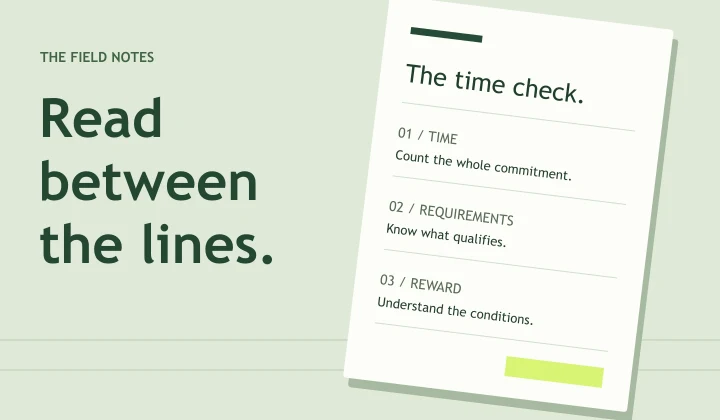
Choose the kind of commitment first
"Online side hustle" covers very different activities. Answering a survey, reaching a level in a mobile game and allowing ongoing device research do not require the same time, skills or privacy decisions.
Before comparing rewards, decide what you are willing to do. Can you give a task uninterrupted attention? Are you comfortable installing software? Would you provide identity information at withdrawal? Is spending out of the question? An offer that conflicts with those boundaries is not a good fit, regardless of its headline.
Gaming and app offers
These offers typically connect a reward to qualifying actions such as installation, a milestone or an in-app objective. Read the complete conditions before starting. New-user requirements, deadlines, device restrictions and purchases can make a large headline much less attractive.
Include all required stages in your time estimate. A reward available after several difficult milestones is not what you receive simply for downloading a game. Never assume that unrelated playtime will count.
The US Freecash review explains the offer-based model and the difference between a task reward and initial withdrawal conditions.
Survey panels
Surveys are designed around the information a study needs, not around guaranteeing every member a steady volume of paid work. Screening and quotas can mean that some attempts do not progress to a complete, credited response.
A points system adds another step: understand the conversion rate and the reward you can actually redeem. A high points total can have a modest cash-equivalent value, and the minimum for a bank transfer may differ from a gift card.
See the Rewardia US review for a concrete example of why the country and redemption method matter.
Device-usage research
Some panels measure device or internet use through software. They can require less repeated manual task completion, but the commitment continues in the background. That is a privacy choice, not simply "passive money."
Check the data collected, who uses a shared device, whether installation is authorised, and how to leave. Read the programme's local terms rather than borrowing reward figures from another market.
All registration links can be opened without a location check on this website. The provider determines eligibility for the labeled market.
Tasks versus skill-based work
Mixed-task platforms combine several small activities, with availability depending on country and profile. The TimeBucks review is a starting point for understanding that format.
Freelance services, tutoring and selling your own work involve different commitments: skills, finding customers, agreeing a scope, expenses and handling payment. They are not interchangeable with reward apps. This publication does not currently recommend a specific campaign for those categories.
The five-question check
- Can I participate? Check the actual country, account, age and device requirements.
- What exactly earns the reward? Identify the qualifying actions and validation process.
- What could it cost? Include purchases, subscriptions, data and personal-information trade-offs.
- When can I redeem? Check minimum balances, method restrictions and processing conditions.
- Is the actual return worthwhile? Count unsuccessful attempts and setup time as well as successful tasks.
There is no need to keep going just because you have already invested time. A threshold can encourage you to pursue an unsuitable task longer than you intended.
Measure what happened, not what was promised
For a useful retrospective measure, subtract actual costs from confirmed rewards and divide by all the time spent. Keep cash-equivalent points separate from money actually received, especially when you have not reached a redemption threshold.
The calculator does the arithmetic with your own values. It does not predict future earnings or turn a pending reward into a completed payment.
Calculate your effective hourly rate